
English follows
Bir çocuğu büyütmek için bir köy insan gerekir derler. Ama ya o köy, savaştan sonra haritadan silindiyse? Ya o okulun bahçesinde ilk sosyalleşme bağlarını kuran çocuklar, evlerini terk etmek zorunda kaldıysa? Kıbrıs’ta dünden bugüne konuşulan dilin, kimliğin ve eğitimin geçirdiği evrim, adanın hırpalanmış coşkusunu ve hafızasını anlamanın en yalın yoludur.
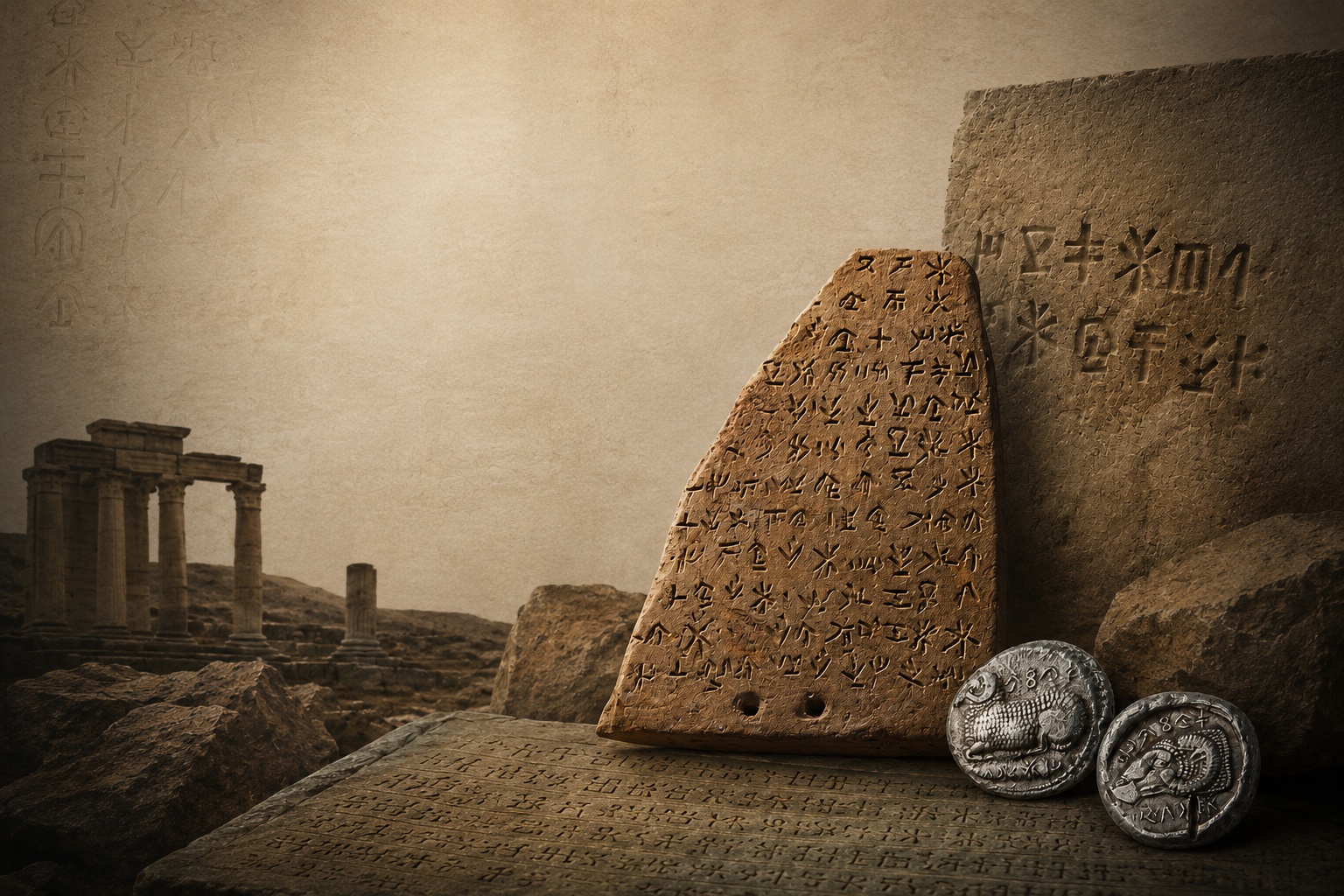
Bugün Lefkoşa Arkeoloji Müzesi’nin vitrinlerinde sessizce duran Geç Tunç Çağı tabletleri, bize modern sınırların çok ötesinde bir hikâye anlatır. M.Ö. 1500’lerde kullanılan ve hâlâ gizemi çözülemeyen ‘Kibro-Minoan (Kıbrıs-Minos) Yazısı’ ile ardından gelen ‘Kıbrıs Hece Yazısı’(Eteocypriot Dili), bu ada topraklarında hiçbir zaman tek bir dilin hüküm sürmediğinin en büyük kanıtıdır.
Akademisyen Louise Steel’in Enkomi kazılarına atıfta bulunarak bahsettiği “Üçüncü Alan” kavramı tam olarak budur: Kıbrıs, Mısır ile Ege’nin, Akalar ile Sami kültürlerinin sadece ticaret yapmadığı; dillerini ve kimliklerini birbirine geçirerek yepyeni, melez bir Akdenizli kimliği doğurduğu akışkan bir coğrafyaydı.
Kıbrıs’ın dilsel melezliği sadece ticaretle sınırlı değildi; adanın kendine has yazı sistemleri, dönemin süper güçlerinin alfabelerine karşı bir tür kültürel direnç ve kimlik beyanıydı. M.Ö. 11. yüzyıldan M.Ö. 3. yüzyıla kadar kullanılan ve 56 işaretten oluşan Kıbrıs Hece Yazısı (Cypriot Syllabary), bu direncin en somut örneğidir.
Bu yazı sisteminin en büyüleyici yanı, dönemin Helen dünyası çoktan Fenike alfabesinden türeyen Yunan alfabesine geçmişken, Kıbrıslıların asırlar boyunca bu eski ve karmaşık hece sistemini kullanmaya devam etmeleridir. Bu sistemle yalnızca adaya özgü ve henüz tam olarak çözülememiş Eteokıbrıs dili değil, aynı zamanda Yunancanın adaya özgü en eski kıbrıs lehçesi ile yazılmıştır. Yani Kıbrıs’ta Rumcanın yazılı tarihi de M.Ö. 11. yüzyıla kadar uzanır. M.Ö. 8. yüzyıldan itibaren Fenike alfabesinden gelişen Yunan alfabesi adada yaygınlaşmaya başlamış, Büyük İskender’in fetihlerinden sonra ise ortak Yunanca (Koine) ve standart Yunan alfabesi egemen hâle gelmiştir. Böylece Kıbrıs’taki Rumca geleneği, alfabe değiştirerek ama kesintiye uğramadan günümüze kadar ulaşmıştır.
1850’lerde İdaliyon (Dali) kasabasında bulunan ve bugün Louvre Müzesi’nde sergilenen ünlü İdaliyon Tableti, bu hece yazısıyla kaydedilmiş en önemli hukuki ve dilsel belgedir. Pers kuşatması sırasında yaralanan askerleri ücretsiz tedavi eden bir hekime kralın verdiği ödülü anlatan bu tablet, adanın sadece çokdilli değil, aynı zamanda ne denli köklü bir kurumsal ve sosyal hafızaya sahip olduğunu da gözler önüne serer. Kıbrıs, Büyük İskender’in adayı fethedip ortak Yunanca olan Koine’yi ve standart Yunan alfabesini yaygınlaştırmasına dek kendi dilsel mirasını ve hece yazısını bir kimlik kalesi gibi korumuştur.
Geçmişe, yakın tarihe baktığımızda bu çokkültürlü akışkanlığın izlerini nenelerimizin, dedelerimizin sesinde buluruz. Britanya sömürge döneminde, okullarda kraliçenin fotoğrafının basılı olduğu fincanlardan süt içen o çocuklar, aslında doğal birer çokdilliydi. 1923 İstinco doğumlu, kız çocuğu olduğu için okula gönderilmediğinden okuma yazması olmayan nenemin 12 yaşına kadar ana dilinin Rumca olması, babamın ticaret yapabilmek için üç dili birden konuşması bu adanın doğal ritmiydi.
Ancak adada milliyetçiliğin sert rüzgârları estiğinde, bu doğal zenginlik suç sayılmaya başlandı. 1950’li ve 60’lı yıllarda yürütülen ‘Türkten Türke kampanyaları’ sırasında, köylerde ağzından Rumca bir kelime kaçıran Kıbrıslı Türklere kesilen para cezaları(prostimo), adanın çokdilli belleğine vurulan ilk büyük prangaydı.
1960 Kıbrıs Cumhuriyeti Anayasası, resmi dilleri Türkçe ve Yunanca olarak eşitleyen, eğitimi cemaat meclislerine bırakarak iki toplumlu yapıyı korumaya çalışan bir denge kurmuştu. Bugün adanın güneyinde Yunanca ve Türkçe resmî dil olmayı sürdürürken, kuzeyinde ise KKTC Anayasası’nın 2. ve 59. maddeleri resmî ve eğitim dilini Türkçe olarak tanımlamaktadır.
Kıbrıs, Demir Çağı’nın 56 sembollü Kıbrıs Hece Yazısı’ndan; bu yazıyla kaydedilen Eteokıbrısça ve Arkadokıbrıs Yunancasından, Helenistik dönemde Yunan alfabesine geçen Kıbrıs Rumcasına; 1934’te Atatürk’ün ücretsiz harf kalıpları göndererek desteklediği Latin harfli Kıbrıs Türk alfabesine kadar uzanan köklü dil ve alfabe dönüşümlerine tanıklık etti.
Bugün Kıbrıs’ta sınır kapıları açıldıktan sonra çocukluk okullarını ziyaret edenlerin hissettiği o ortak sızı, aslında kaybolan ortak geleceğimizdir. Dil politikaları yalnızca dilleri değil, insanları da cezalandırır. Antik çağın çokkültürlü, melez ve zengin Kıbrıs’ından geriye sadece çölleşmiş, tek tipleşmiş bir hafıza bırakır. Oysa Kıbrıs’ın Kıbrıs’ın mirası ayrışmak değil, Akdeniz’in dillerini, alfabelerini ve kültürlerini yüzyıllar boyunca bir arada yaşatabilen o eşsiz çoğulculuktur. Bunu bize en iyi anlatan da, farklı uygarlıkların izlerini aynı yüzde anlatan kilden tabletlerin varlığıdır.
Kaynakça:
Enkomi and Egypt: Exploring the Third Space in Cyprus
Kıbrıs’ta İlk Yazı – Tuncer Bağışkan
Milliyetçilik Kıskacında Kıbrıs – Niyazi Kızılyürek
(EN)
From Clay Tablets To Language Fines: Cyprus’s Lost Multilingual Heritage
They say it takes a village to raise a child. But what if that village disappeared from the map after a war? What if the children who formed their first social bonds in a village schoolyard were forced to abandon their homes? The evolution of language, identity, and education in Cyprus offers perhaps the clearest path to understanding the island’s wounded memory and enduring spirit.
Today, the Late Bronze Age clay tablets resting silently in the showcases of the Cyprus Museum in Nicosia tell a story that reaches far beyond modern borders. The Cypro-Minoan script, used around 1500 BCE and still only partially deciphered, followed by the Cypriot Syllabary, are compelling evidence that no single language has ever dominated this island.
This is precisely what archaeologist Louise Steel describes—drawing on the excavations at Enkomi—as the “Third Space.” Cyprus was not merely a crossroads where Egypt and the Aegean, or Achaean and Semitic cultures, exchanged goods. It was a fluid Mediterranean landscape where languages, identities, and traditions blended to create an entirely new hybrid culture.
Cyprus’s linguistic hybridity extended far beyond commerce. Its indigenous writing systems represented a form of cultural resilience and a declaration of identity in the face of the dominant alphabets of the ancient world. The Cypriot Syllabary, consisting of 56 signs and used from the 11th to the 3rd century BCE, stands as the clearest example of this resistance.
Perhaps the most remarkable feature of this script is that, while much of the Greek world had already adopted the alphabet derived from the Phoenician script, the people of Cyprus continued to use their ancient and complex syllabic writing system for centuries. It recorded not only Eteocypriot, the island’s indigenous language that remains only partly understood, but also the earliest Cypriot dialect of Greek. In other words, the written history of Cypriot Greek can be traced back to the 11th century BCE. From the 8th century BCE onward, the Greek alphabet—developed from the Phoenician script—gradually spread across the island. Following the conquests of Alexander the Great, Koine Greek and the standard Greek alphabet became dominant. Thus, the Greek linguistic tradition of Cyprus survived uninterrupted, changing only its writing system.
Discovered in the town of Idalion (modern Dali) during the nineteenth century and now preserved in the Louvre Museum, the famous Idalion Tablet is the most significant legal and linguistic document written in the Cypriot Syllabary. It records the reward granted by the king to a physician who treated wounded soldiers free of charge during the Persian siege of the city. The tablet demonstrates that ancient Cyprus possessed not only remarkable linguistic diversity but also a sophisticated institutional and civic tradition. Until Alexander the Great introduced Koine Greek and the standard Greek alphabet, Cyprus preserved its indigenous script and linguistic heritage as a fortress of cultural identity.
When we move from antiquity to living memory, traces of this multilingual world can still be heard in the voices of our grandparents. During the British colonial period, children drank milk from cups bearing the portrait of the British monarch in their classrooms, yet many of them grew up naturally multilingual. My grandmother, born in İstinco in 1923, never learned to read or write because she was not sent to school simply for being a girl. Until the age of twelve, her first language was Greek. My father spoke three languages to conduct his business. This was simply the natural rhythm of life in Cyprus.
Yet when the harsh winds of nationalism swept across the island, this natural richness began to be treated as a crime. During the “Turkten Turke” (“From Turk to Turk”) campaigns of the 1950s and 1960s, Turkish Cypriots who accidentally uttered a single Greek word in their villages could be fined—a prostimo. These penalties marked one of the first major assaults on Cyprus’s multilingual collective memory.
The 1960 Constitution of the Republic of Cyprus established Turkish and Greek as equal official languages while entrusting education to the separate Communal Chambers in an effort to preserve the island’s bicommunal structure. Today, Greek and Turkish remain the official languages of the Republic of Cyprus in the south, while in the north, Articles 2 and 59 of the Constitution of the Turkish Republic of Northern Cyprus define Turkish as both the official language and the language of education.
From the 56-symbol Cypriot Syllabary of the Iron Age, which recorded Eteocypriot and Arcadocypriot Greek, to the adoption of the Greek alphabet for Cypriot Greek during the Hellenistic period, and finally to the Latin-based Turkish alphabet introduced among Turkish Cypriots with Mustafa Kemal Atatürk’s support in 1934—when he provided printing type free of charge—Cyprus has witnessed profound transformations in both language and script.
Today, when Cypriots cross the Green Line and revisit the schools of their childhood, the sorrow they feel is not simply nostalgia; it is grief for a shared future that never came to be. Language policies do not merely reshape languages—they also punish people. They can reduce the rich, hybrid, multicultural Cyprus of antiquity to a barren landscape of uniform memory.
Yet Cyprus’s true legacy has never been division. Its inheritance is the extraordinary ability to sustain multiple languages, alphabets, and cultures side by side for centuries. Nothing illustrates this more powerfully than the ancient clay tablets, whose silent surfaces still bear the imprint of civilizations that once learned to speak to one another.
Sources:
Enkomi and Egypt: Exploring the Third Space in Cyprus
The Earliest Writing in Cyprus — Tuncer Bağışkan
Cyprus in the Grip of Nationalism — Niyazi Kızılyürek